Just days before the start of the Australian Open, tennis fans were treated to one of the most unusual and entertaining events of the season. The One Point Slam, a unique exhibition tournament decided by a single point per match, produced shock results, viral moments, and an incredible Cinderella story — an amateur defeating Jannik Sinner and walking away with a prize larger than most Australian Open payouts.
What Is the One Point Slam?
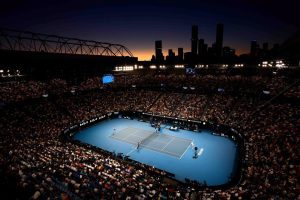
The One Point Slam is a pre–Australian Open exhibition tournament that has now been held for the second consecutive year. Its concept is simple and intentionally chaotic: every match is decided by just one point.
The tournament brings together a mix of:
- Professional ATP and WTA players
- Amateur players who qualify through regional competitions (one champion from each Australian state)
- Celebrities, including former professionals
Among past participants were Marat Safin and Nick Kyrgios, adding star power and entertainment value to the event.
How the One Point Slam Format Works
The rules are designed to maximize unpredictability:
- Each match consists of a single point only
- The server is decided by rock–paper–scissors
- Professional players and former pros get one serve
- Amateurs and non-professional celebrities are allowed two serves
The winner of the tournament receives AUD 1,000,000 (approximately USD 670,000), a prize larger than what many players earn deep into the main draw of the Australian Open. To emphasize the spectacle, organizers even placed a transparent box of cash courtside — complete with bills printed with the face of Australian Open tournament director Craig Tiley.
Why the One Point Slam Is So Entertaining
The format creates instant drama. With everything decided by one rally, anything can happen — and it did.
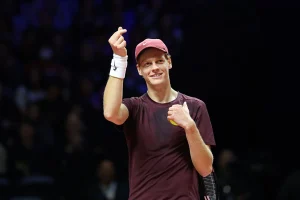
- Jannik Sinner lost to amateur Jordan Smith after missing his serve into the net
- Pedro Martinez eliminated Alexander Bublik using an underarm serve — Bublik’s own signature move
- Carlos Alcaraz was knocked out by Maria Sakkari after his drop shot clipped the net
- Daniil Medvedev lost a long rally to Amanda Anisimova, who later joked she was just happy to keep more than five shots in play
Perhaps the most stunning run came from world No.117 Joanna Garland, who defeated both Alexander Zverev and Nick Kyrgios. Garland later said that beating Kyrgios was the best win of her life.
The Mental Pressure Was Real — Even for Top Players
Despite being an exhibition, the psychological tension was obvious. After winning his first match, Sinner admitted his heart rate had climbed close to 200 beats per minute.
Players openly talked about nerves, even though the stakes were technically lower than a Grand Slam. In a one-point format, hesitation often proved fatal.
Standout Moments and Viral Highlights
Several moments stood out during the event:
- Nick Kyrgios produced the shot of the tournament with a stunning passing winner that clipped the baseline — celebrating as if he had won a Grand Slam final
- The rally of the tournament came in Medvedev vs amateur Petar Jovic, a point Medvedev admitted he thought he had already lost
- The event opened with Corentin Moutet failing to return the serve of a coach working with Adolfo Vallejo
The entertainment value was undeniable.
What the Format Reveals About Players
While the One Point Slam should not be treated as serious competition, it does highlight certain tendencies:
- Coco Gauff lost to Donna Vekić after placing her serve into the middle of the net — once again exposing ongoing serving issues
- Alexander Zverev was eliminated by Garland after becoming passive under pressure, a recurring pattern in high-stress moments
As Arthur Rinderknech, who lost to Anisimova, summed it up:
“Risk it or go home. I went home.”
Veterans, Showmanship, and Personality
The tournament also delivered memorable personality moments:
- Marat Safin returned to the court, saying he is now calmer and less stressed, defeating an amateur before losing to Frances Tiafoe
- Carlos Alcaraz sprinted onto the court with the intensity of a Grand Slam final, showing his natural flair for performance
- After losing to Garland, Nick Kyrgios smashed his racket — then handed it to a child in the crowd
The Fairytale Ending: Jordan Smith’s Incredible Win
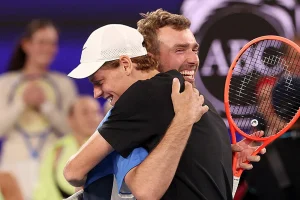
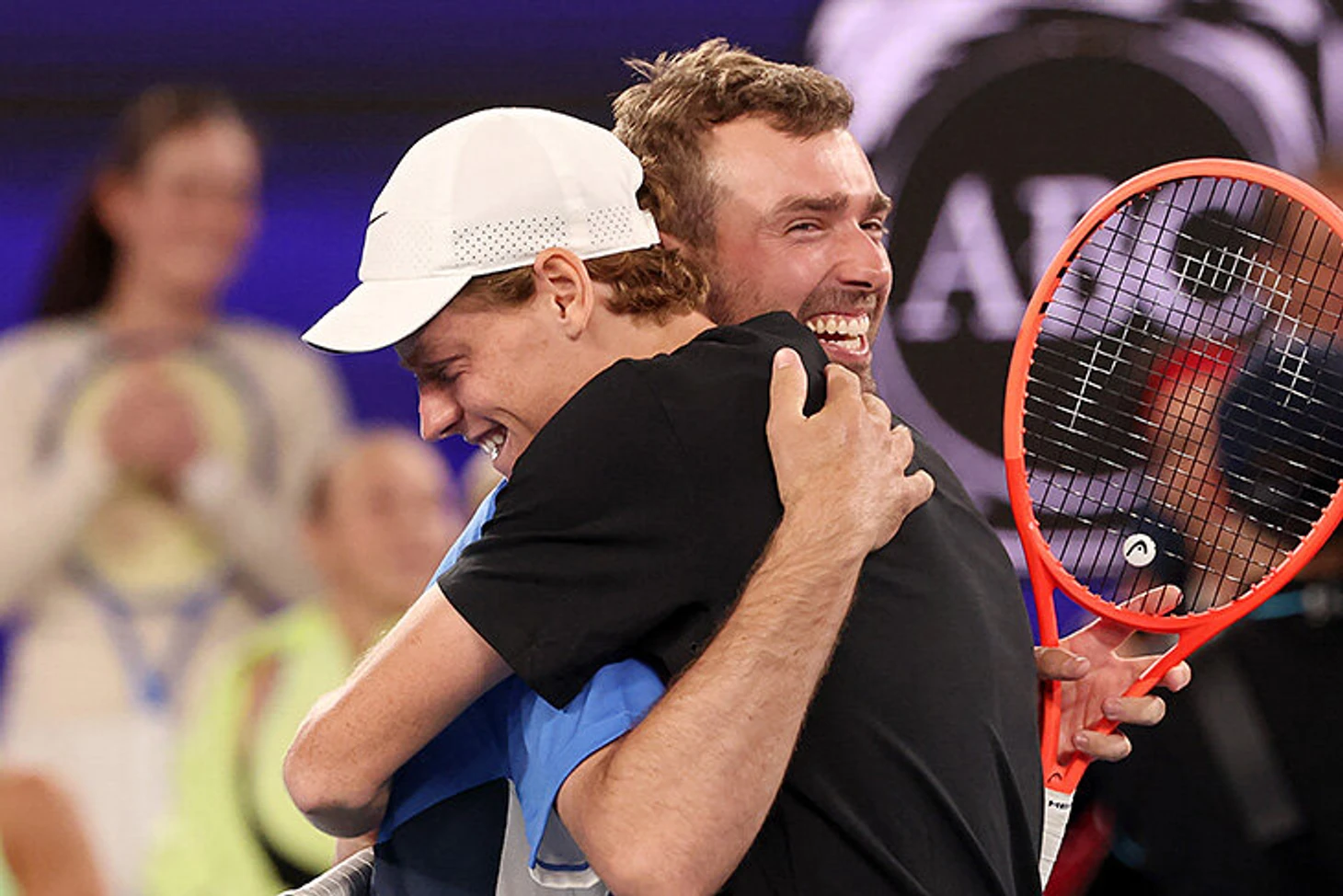
The final featured two amateurs: Jordan Smith and Joanna Garland. Garland lost the title after sending a backhand long, while Smith claimed the million-dollar prize.
Only Australian Open semifinalists will earn more prize money than Smith during the main tournament.
Smith said he plans to either invest the money or buy a house.
While officially an amateur, Smith’s background is impressive: he was a national junior champion in Australia, played college tennis in the United States on scholarship, once held a professional ranking (outside the top 700), and currently works as a professional coach within Tennis Australia.
Still, his victory remains one of the most extraordinary pre–Australian Open stories in recent memory.
Why Events Like the One Point Slam Matter Before the Australian Open
While the One Point Slam is primarily entertainment, it captures the spirit of tennis ahead of the season’s first Grand Slam: pressure, unpredictability, and the fine margins that decide matches.
It also serves as a reminder that in tennis — sometimes, one point really is everything.
For more tennis news, analysis, and unique stories from the world of Grand Slam tournaments, visit our tennis news section.