The split between Carlos Alcaraz and Juan Carlos Ferrero just weeks before the start of a new season shocked the tennis world. What was long viewed as one of the strongest player-coach relationships in the sport unraveled over contract disagreements, raising uncomfortable questions about ambition, authority, and the cost of success at the very top of modern tennis.
A Partnership That Once Seemed Unbreakable
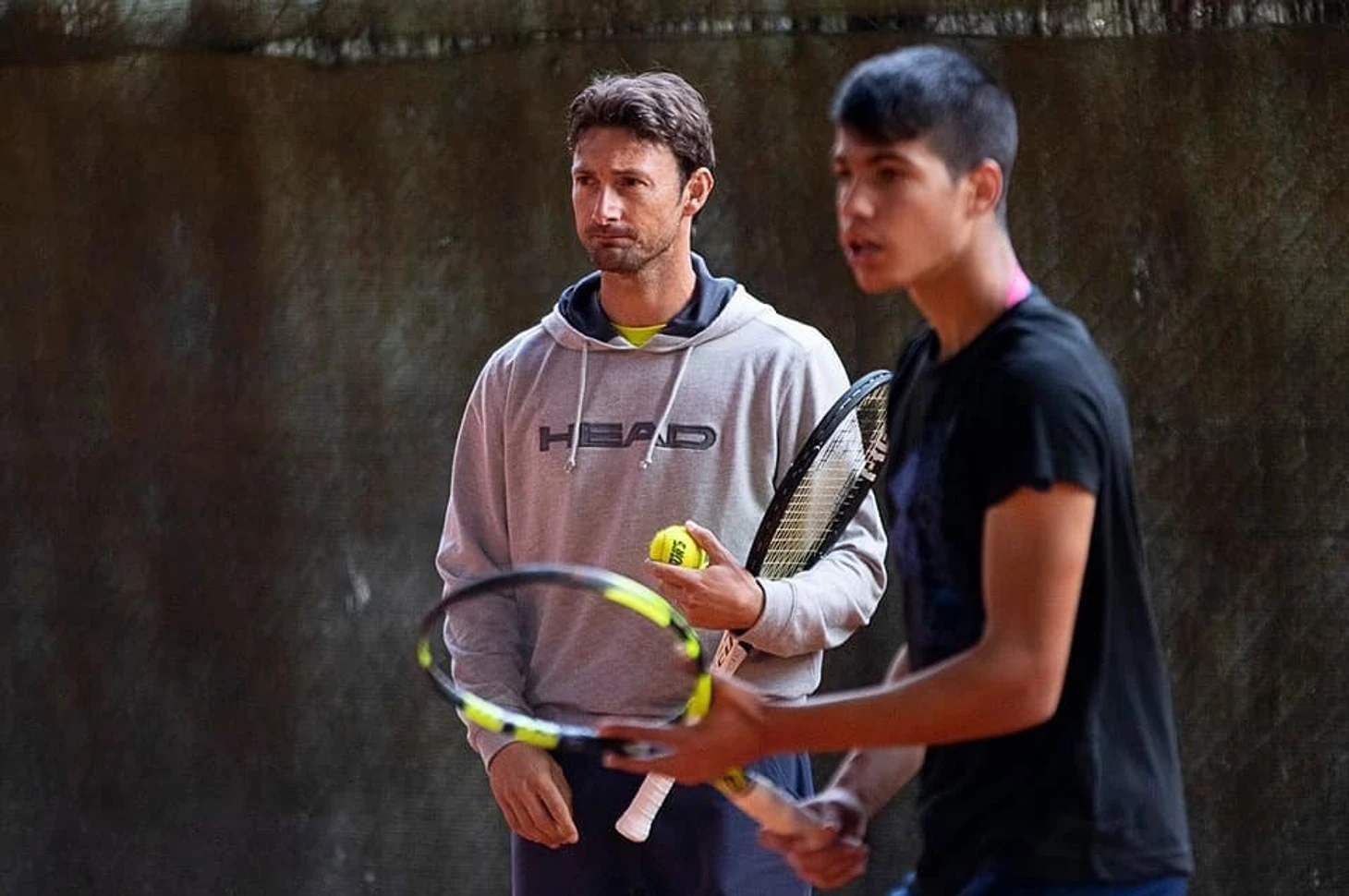
For years, the relationship between Carlos Alcaraz and Juan Carlos Ferrero was presented as a model of stability in professional tennis. Player and coach were not just collaborators — they were often described as family. Ferrero was the architect of Alcaraz’s rise, the former world No. 1 who guided a teenage prodigy step by step toward Grand Slam glory.
That is why their separation, announced barely two weeks before the new season, felt so jarring. When reports emerged that the break was driven by disagreements over a new contract, the story became even more dramatic. How could a partnership built on trust, loyalty, and shared vision fall apart over money and control?
To understand what truly happened, it is necessary to look back at how this alliance was formed — and why it worked so well for so long.
Ferrero Chose a Long-Term Project Over Established Stars
Juan Carlos Ferrero did not need another young prospect when he first heard about Carlos Alcaraz. In 2018, shortly after ending his collaboration with Alexander Zverev, Ferrero had serious offers from proven elite players such as Dominic Thiem and Simona Halep, both already competing for the biggest titles in the sport.
Instead, Alcaraz’s agent, Albert Molina, approached Ferrero with a different proposition. What he offered was not an immediate return, but a project — the opportunity to personally develop a future world-class player from the ground up. That idea resonated deeply with Ferrero.
Former coach Antonio Cascales, who had guided Ferrero himself to the top, suggested a hybrid solution: work with both Thiem and Alcaraz, splitting time. But Ferrero was already committed to the idea of full immersion. Building an elite player from scratch would require absolute focus, and he was willing to sacrifice short-term rewards for long-term purpose.
Even before formally meeting Alcaraz, Ferrero knew of his creative playing style. He had first seen him in 2017 at Spain’s national under-14 team championships, hosted at Ferrero’s academy in Alicante. Alcaraz led Murcia to victory, winning every singles and doubles match. A year later, Ferrero watched the 14-year-old defeat a top-300 professional in his first senior match. Soon after, Alcaraz received a wildcard to the academy’s tournament — and Ferrero made the decision to become his personal coach.
A Professional Match That Turned Personal
Ferrero’s previous experience with Zverev had ended after eight months amid disagreements about professionalism. Ferrero believed distractions — including social media — prevented Zverev from committing fully to tennis. Zverev, in turn, felt disrespected.
With Alcaraz, none of those tensions existed. Despite contrasting temperaments, their professional chemistry was immediate and natural. Ferrero accepted a significantly reduced salary compared to his work with Zverev, even though IMG partially covered his compensation. The early years were modest: traveling to tournaments by car, drawing puzzled looks from other coaches who could not understand why a former world No. 1 had “downgraded.”
For Ferrero, this was never just a job. Emilio Sánchez, a former top-10 player who knows both men well, described Ferrero’s role as almost paternal — focused not only on tennis development, but on shaping Alcaraz as a person.
Life Inside the Academy: Discipline, Education, and Isolation
Alcaraz moved into Ferrero’s academy full-time, living in a bungalow on site while Ferrero resided nearby. The work was comprehensive. His serve mechanics were restructured, his physical condition transformed, and his education was taken seriously. Every day included more than three hours of academic study, which Ferrero viewed as essential for personal growth. Only after completing the curriculum were players allowed to choose whether to continue formal education.
The transition was difficult. Tennis became a job for the first time. Alcaraz struggled during his first pre-season camp and missed home deeply. Years later, he would say that moving to Alicante allowed him to fully commit to tennis and define clear career goals. Shortly after his 16th birthday, Ferrero and Alcaraz’s parents agreed that Carlos would remain at the academy full-time.
A specialized support team developed around him, including a podiatrist who examined Alcaraz every three months and produced handmade custom insoles — a level of detail that underscored the seriousness of the project.
Lockdown as a Turning Point in His Development
In early 2020, after earning his first ATP-level win in Rio de Janeiro, Alcaraz returned to Spain just as the world shut down due to COVID-19. The academy chose to isolate together. For roughly six weeks, students and staff lived under strict lockdown, followed by additional months before the tour resumed.
Alcaraz turned 17 without his family and struggled emotionally. His second coach, Kiko Navarro, later recalled that Carlos needed extra psychological support during that time. Yet the isolation also fostered a unique bond within the academy. Once health risks were ruled out, they organized themed dinners, movie nights, games, and video calls with professional players.
Many believe this period acted as an unintended high-performance training camp — a concentrated phase of physical and mental development at a perfect moment in Alcaraz’s growth. It was also when the professional dynamic between Ferrero and Alcaraz fully crystallized: discipline, punctuality, focus, and zero tolerance for distractions. Ferrero was famously direct, never softening criticism when standards were not met.
Respect, Authority, and Tough Love
Ferrero demanded a great deal, but Alcaraz listened — because he respected him. As a former Grand Slam champion, Ferrero understood the journey to the top. More importantly, he could support, advise, and challenge Alcaraz when needed.
Former Roland Garros finalist Alex Corretja described Ferrero’s approach as necessary “tough love,” designed to prepare a young genius for the realities of the tour while preserving his creativity. Ferrero guided Alcaraz through Futures and Challengers, helped him understand the professional game, and unlocked his potential faster than anyone expected.
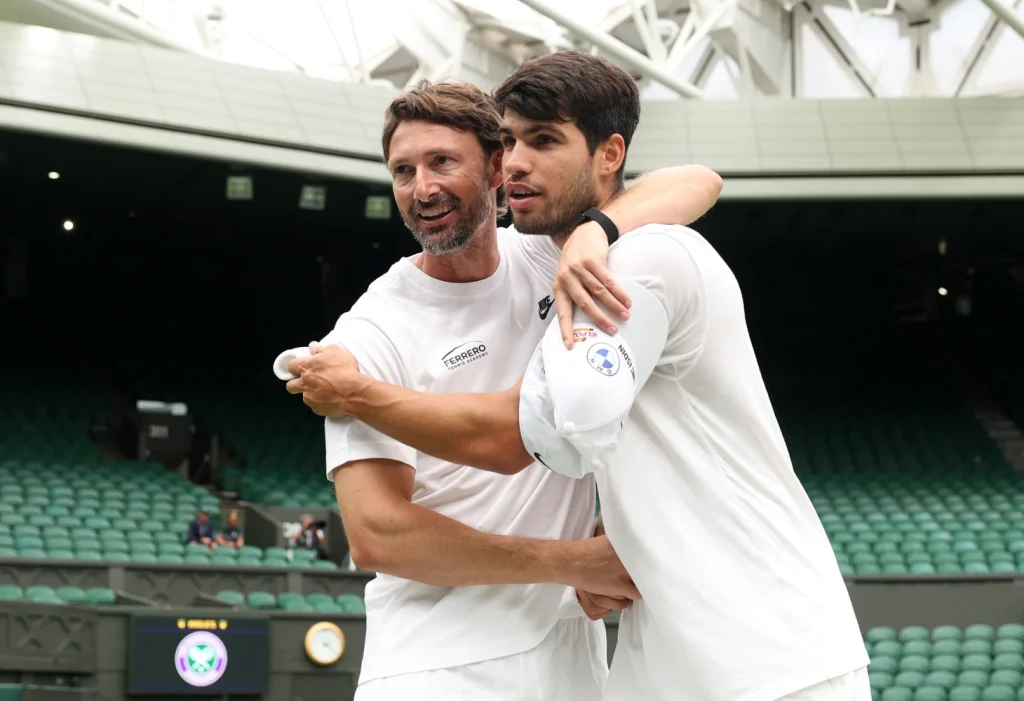
Alcaraz frequently told Ferrero when he felt ready for the next step. Before his first Challenger title. Before his first ATP trophy. Before his first major breakthrough in 2022. After winning his first Masters in Miami, Alcaraz told his coach: “I’m ready to win a Slam.” Five months later, he lifted the US Open trophy.
By 2023, when Alcaraz won Wimbledon, Ferrero could still spar with him competitively for nearly an hour on court. Only after a knee injury later that year — suffered while playing padel and requiring surgery — did Ferrero begin to struggle physically to match Alcaraz’s intensity.
When Success Changes the Balance of Power
This context makes the eventual split more understandable, if no less painful. As Alcaraz’s status grew — titles, money, global influence — the dynamics inevitably shifted. What began as a shared vision slowly encountered the realities of power, authority, and financial negotiation at the highest level of sport.
The partnership that once thrived on trust and alignment ultimately faced pressures that few relationships survive unchanged.
Conclusion
The story of Carlos Alcaraz and Juan Carlos Ferrero is not one of failure, but of transformation. Together, they built one of the most remarkable player-coach success stories of modern tennis. Their separation does not erase that legacy — it confirms how far the project went.
In elite sport, even the strongest bonds are tested by ambition, money, and control. Alcaraz is now powerful enough to redefine his path. Ferrero has already left an indelible mark on tennis history — both as a champion and as the man who helped create one.
Their partnership may be over, but its impact will be felt for decades.
For more in-depth news, analysis, and updates on the world’s top tennis players, visit our tennis news section, where we cover the latest stories from the ATP and WTA Tours.